Friday, April 11, 2008

Fun with pictures

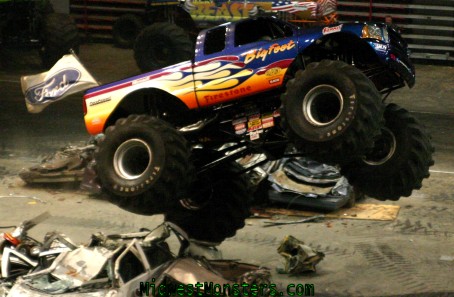
Got these in a chain email (thanks Elaine), but they're still great.


And for pure "Awwww..." value:


Pretty self-explanatory, I'd say.

Thursday, April 10, 2008

Knowest not I

To know is to know that you know not. The more you know, the more you know you don't know. Wisdom is not knowledge, wisdom is knowledge of knowledge not.

So many different ways to say the same thing. In a fit of moronic stupendousness I'm reduced to fragmented expressions of sentences.

Know not now. Must know more. Know not more. More not known. Know now cannot. Try know more now cannot. Is hard.

Limit. Limit laws. Known limits. No limits. Sky's the limit. Limited. Conscious cognitive dissonance. Respondent conditioning says. I do. Learn learn more more. Limit.

Regurgitation mess. Sit too long. Aching gluteus maximus. Music, music. Tunes in my head. Schumann! Du meine Seele, du mein Herz.

Wherefore art thou, motivation? Concentration concentrated. Law of competitive exclusion. Concentration loses and goes extinct. All the things you said, all the things you said, running through my head, running through my head.

Fried pancakes wasabe mushy-mushy!

'Scuse me. Regurgitation mess.

Monday, March 24, 2008

Elbow-licking

Contrary to popular belief, it is actually possible to lick your own elbow.


And here I was thinking that not being able to lick your own elbow was a biological fact. Be warned, though, only about 1% of the human population can do this, so don't go and dislocate your shoulder on my behalf.

Thursday, March 20, 2008

The Fate of the Universe

One of the cool things about being in college is being able to listen to cool people speaking about cool stuff. A couple of days ago Dr Wendy Freeman, director of the Carnegie Observatories, gave a lecture about the latest going-ons in astronomy/astrophysics.

You know, stuff about giant Magellan telescopes, Hubble's successor (James Webb), dark matter, quasars, the four dimensions of space, the curvature of space-time, the weight of the universe. Stuff like that. You know, INTERESTING stuff. Right.


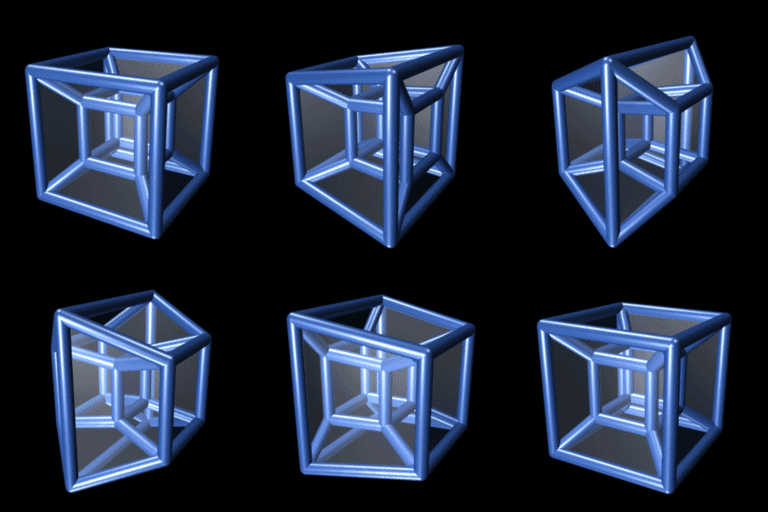
A four-dimensional 'tesseract' rotating on ONE axis


Anyway, what's MORE interesting is that apparently the latest research in astrophysics has shown that the universe does not have enough matter to stop the universe from expanding.

*Gasp* The universe is EXPANDING?

Well, yes, astronomers since the 1930s have shown, through observation of objects (stars?) of fluctuating luminosity from other galaxies that... that...

Nevermind, the point is that the scientists say that the universe is expanding, so they MUST be right, RIGHT?

Well, the question that scientists THEN asked is whether the universe would continue to expand FOREVER. Would the universe keep getting larger till kingdom come or, worse yet, 'heat death' (open universe model)? Or would the universe eventually stop expanding, and eventually be of fixed size (flat universe model)? Or, heaven forbid, would the expansion eventually run down and the universe then start to contract (closed universe model), leading eventually to The Big Crunch?


Well, the answer apparently depends on the amount of matter there is in the universe, and the latest research on dark matter has indicated that the universe does NOT, in fact, have enough mass to halt its expansion.

Thus the universe is doomed to grow ever larger, till we are all stretched out like rubber bands on a pair of braces.


Well, at least it's better than the Big Crunch.


In physio-philosophical terms though, that means that our ever so insignificant existence is becoming even less significant. Our presence in this universe is being diluted, at an EXPONENTIAL rate. Sad, isn't it?

There's still hope, though. Dr Freeman said that as of the moment, a number of oscillating models of the universe cannot yet be ruled out. That means it's either we stretch till we can stretch no more, or we are doomed to an eternal bungee jump.


*shrugs* Either way works for me. We're all gonna die anyway.

Ah, cynicism.

Tuesday, March 18, 2008

Delusions

It comes
It comes!

Fiery fire painless pain
Burning flesh and making rain
Rubbing salt into the wound
Dig out the splinter with a spoon

Gratification! Whereupon hence?
Go now my brother, into!
Into!
The seal
The pit
The fiery fire!

Die, fool!
Ignominious moron
Thinkest thou ruinest I?
I?

Cackling laughter makest me
Chatter-hungry lady be
For the pie before I dine
Drinketh thou with pretty wine

Go now, go now!
Fire, fear, foes!
Anger knows, anger goes
Killeth me and eatest thou

Feed the blood, fan the flame
No more suffering, no more shame
Only left with pitiest pyre
The body hung over the fire

Evil! Evil! Oh, oh!
Nothing, save me, all alone!
Tend to me you cowardly dunce
Faerie lust before the moon

Emptiness without
Reigning within queen
Of hell
Night and darkness
Beats, Time mourns
Forever lost alone, alone

The sun! It burns!
You will feel the flames soon enough
I cannot stop the sickness
And cannot fend of the madness
Consumes me
Overtakes me
Wildness whereupon within!

GO NOW!
Into the fires of damnation
Let heaven mourn

And leave me alone
Leave me alone

Sunday, March 16, 2008

Equality


"All animals are equal, but some animals are more equal than others." The mindset of much of the world nowadays, indeed. It's interesting that "Animal Farm" was written against communism, in support of capitalism, and yet capitalism is as guilty of the above statement as much as communism is. The only difference is that in capitalism, we're open about it. And we couldn't care less.

We call it by different names now. We call it the survival of the fittest. We call it the will to power. Sometimes in a fit of mock humility we even invoke God's name and call ourselves blessed. But the essence of it is the same: we rank people according to their ability. In this one big rat race, all that matters anymore is rank.

Sure, I understand. Some human beings are better than others. They score higher on IQ tests, they get better grades in school, they make more money, they are more successful. Sure. That's the way things are. Human beings are not equal. Some are born innately more successful. Others work harder. Communism ignored this and that's why the system failed.

But what pisses me off is that people throw human worth into the equation. Sure, some people are more successful than others, but successful people are not worth more than the common man. All human lives are of equal value. That has been forgotten in the competition to succeed. We think that by being better than other people, the value of our lives become greater than the lives of others.

In the 1930s, the people of the Western World took the doctrine of the survival of the fittest to heart. They believed that the value of a person was based on how smart he was, and how much he contributed to society. Those who did not "make the grade" were refused immigration, barred from having children, and in some cases even neutered. The measure of the individual was the measure of his performance on an IQ test. This movement was called the eugenics movement.

And in the 1940s, the eugenics movement led directly or indirectly to the massacre of 6 million Jews, Gypsies, and other individuals in the Jewish Holocaust by the Nazis.

After the war, the eugenics movement was recognized as immoral and ethically unsound, and was consequently banned. The world had learned its lesson.

We seem to be forgetting what we have learned, unfortunately. Again we seem to be succumbing to social and political policies that rank individuals based on their intelligence and "contribution to society". Sometimes we call it meritocracy. Sometimes we call it "getting what we deserve". I call it the failure of humanity to rise above petty competition and recognize that we are ALL truly of equal value.

The other famous maxim from Animal Farm is Boxer the horse's anthem, "I Will Work Harder!". Hard work is a good thing, but if competition is all there is, then we might as well all end up just like Boxer:


I will work harder, indeed. But I no longer want to beat the dead horse. Sorry, Boxer.

Wednesday, March 12, 2008

Brilliant


Forgive me, but as an old Pokemon fan with a rising interest in foreign (and not so foreign) politics, I find this unbearably funny.

Friday, March 07, 2008

What a Man Wants

"I am ready to tell you, at least from my perspective, what a man wants. He wants his children to grow and mature to be wise and capable, independent and self-reliant, and yet he longs to hold them in the palm of his hand as he did on the day of their birth. He wants to be able to subdue his pride and forgive their brusqueness so that he can remain close to them until they see his caring. He wants to be free to express his caring as David did when he cried "Absalom, my son, my son, would that I had died for thee" (1 Samuel 18:33). Although father and son seem made for contention, they derive their highest sense of pride from one another. He wants to admire his daughter's beauty and grace, for each girl child's beauty is unique in the eyes of her father. At the same time, he wants to honor her wit and intellect so that the complete human being that sh becomes is not obscured by artificial sentimentality.

He wants his mate's love and caring without having to ask for it, and he wants to be able to show his love for her without having to be concerned that it undermines the image of his manhood. He hates to see himself as a tearful, weak creature, dependent on others for his sense of affirmation. But he is tired of hiding his tears and turning away to preserve some traditional image of manhood.

I will be more explicit. I am tired of wars. I do not want to be killed or maimed, and I do not enjoy other people dying or being maimed. I want to accept responsibility for what I do and not be blamed for what I did not do. I have always judged my fellow human beings one at a time on the merits of their own behavior, and I demand to be judged as one person on the basis of my own faults and virtues. As such, my race, religion, politics, and sexual preference are nobody's business. I have gotten used to calling myself a man. The title is not pejorative; it is something that I have done for half a century, and I am comfortable with it. If you choose to call yourself something else, that is all right with me, but please leave my definition of myself to me. Any thinking man continues to evolve philosophically- influenced by every person, circumstance, and concept that he is exposed to. I want to continue this growth and come to be what I want to be.

I will not have my values dictated by football coaches. The maxim "Winning is everything" leaves out too much. I will not give up the joy and excitement of competition, but I am joined to all of humanity, so that if I am the victor, then so I am the vanquished. To deny this is to go through life as half a person.

I resent being categorized, and i resent people who place people in categories. To say that men have certain characteristics is valid in a general sense. To say that a man has certain characteristics is only valid with a comprehensive knowledge of the individual. To attribute something to that person on the basis of stereotyping is disruptive of the essential human rights of that individual.

I believe that life is a ship in distress, and that the true task of humanity is to get everyone into the lifeboat. It is unfortunate that so many people divide humanity into us and them, so that the us is somehow better, more easily forgiven and accepted. Them is forever below the salt, clothed in the darker garments of evil. We are currently in the midst of a great revolution, and the half of the human race called female has, after countless centuries of oppression and exploitation, stood up and cried "Nonsense!" The good that will accrue to all of us is immeasurable. The lies and distortions relative to the nature of women have diminished the entire human race. The sooner they are lost in antiquity, the better.

Psychology has given us an expanded understanding of the differences between men and women. Healing techniques attempt to bridge the gap. We have sensitivity training to help men acquire women's skills, and we have assertiveness training to help women acquire men's skills. I hope some innovator will evolve some procedures that can teach the archaic practices of good manners, decency and good will.

I am convinced that the following wars of ambition-- the striving and the stolidness, the silences and the shrugging off of an uuncomfortable sentiment-- a man wants to be seen as good. The term a good man once welded unity, a thoughtful caring person who touched the lives of all around him. To quote Mark Antony (Shakespeare, 1599/1919, Julius Caesar, act 5, scene 5, line 73), "His life was gentle and the qualities so mixed in him that nature might stand up and say to all the world-- this was a man.""

-Excerpt from "What Does A Man Want" by Stanley R. Graham, American Psychologist, July 1992, 47(7): 837-841.

Sunday, March 02, 2008

Imperfect

I stare at the wall in front of me, and as I stare at it, it becomes something wondrous to behold. It is a wall made out of cement and steel, painted white, and it is beautiful.

A beautiful wall? Preposterous, isn't it? Yet that is the thought that runs through my mind. It is beautiful because it is imperfect. There are chinks in it, depressions here and there, imperfections, crevices, bumps and protrusions. But as I run my finger over it, and feel its texture, its touch, it feels beautiful indeed.

Do you notice how much of our notion of beauty is based on sight? And how shallow that definition of beauty is? The wall before me certainly may not be much to look at, but it feels beautiful to my touch. Silence is the absence of sound, and definitely nothing to look at, but if you close your eyes and concentrate, the sound of silence can be more beautiful than the greatest works of Mozart. And the beauty of an emotion! Ecstatic joy, loving kindness, moving sadness, even numbing grief. Beauty in its purest and most unadulterated form.

But I digress. Looking at the wall in front of me, I realize that much beauty lies in imperfection. I look at a picture, and I see that it is the out-of-place, the quirky, that endears a picture to me. I listen to music, and it is the clashing of two sounds, the harmonious dissonance, that replays itself over and over again in the music of my mind. I take a bite of some peppermint ice-cream, and the clash of mintyness and sweetness clings to my tongue. I get to know a person, and I realize that it is the imperfections, the character flaws, the divergences from the norm that make them so beautifully different. Flaws are as underrated as beauty is overrated.

It is the flawed coin that is prized. It is the splash of colour on an otherwise perfectly white canvas that we esteem so highly, the bright stars in an otherwise perfectly black sky that so overwhelms us with their beauty. A new blade of grass, ruining the perfect snow. A tear falling softly on an otherwise perfect cheek. The howl of a wolf ruining the perfectly quiet night.

Ah, imperfect beauties. The world needs more of those.

Wednesday, February 27, 2008

Lament of the Wife of a Psychoanalyst

By Beatrice Allen

I never get mad: I get hostile;
I never feel sad: I'm depressed.
If I sew or knit and enjoy it a bit,
I'm not handy- I'm merely obsessed.

I never regret- I feel guilty,
And if I should vacuum the hall,
Wash the woodwork and such, and not mind it too much,
Am I tidy? Compulsive, that's all.

If I can't choose a hat, I have conflicts,
With ambivalent feelings toward net.
I never get worried or nervous or hurried:
Anxiety- that's what I get.

If I'm happy, I must be euphoric;
If I go to the Stork Club or Ritz
And have a good time making puns or a rhyme,
I'm a manic, or maybe a schiz.

If I think that a doorman was nasty
I'm paranoid, obviously.
And if I take a drink without stopping to think,
Alcoholics B. Allen, that's me.

If I tell you you're right, I'm submissive,
Repressing aggressiveness, too.
And when I disagree, I'm defensive, you see,
And projecting my symptoms on you.

I love you- but that's just transference
With Oedipus rearing his head.
My breathing asthmatic is psychosomatic,
A fear of exclaiming, "Drop dead!"

I'm not lonely- I'm simply dependent.
My dog has no fleas, just a tic.
So if I seem a cad, never mind- just be glad
That I'm not a stinker- I'm sick.

Monday, February 25, 2008

Humanity Under Fire

I may be naive, but I am a believer in the general goodness of mankind. I believe that men (and women) are, in general, considerate and rational people. Sure, maybe we're all prone to do wrong, but I believe that humans are predictable when it comes to morality: we care about those we love and do the best we know how for them, and we hate anything that we perceive as a threat those we love.

Where things go wrong, though, is how we "perceive" threats and how we respond to them. It's when our desire to care for ourselves and those we love clashes with other people's perceptions of what's in their best interest that conflicts arise.

Take for example Adolf Hitler. I believe that his primary motivation was to further the standing of himself, his family and friends, his country, and his "race" in general. Basic human nature, nothing really WRONG with those wants. But what WAS wrong was how he responded to the Jews, whom he perceived as a threat/competition to his race. He shouldn't have murdered them, to put it mildly.

But can you not see his primary motivation there? He thought he was doing what was best for his nation/race. If he hadn't killed all those people he would probably be remembered in history as a great conqueror along the lines of Napoleon, a hero of the German people.

In other words, even those who commit great atrocities are motivated primarily by the same feelings that drive all of us: a desire to advance the positions of ourselves and those we care for. That's the survival of the fittest. That's natural law. That's NATURE through and through.

Take, as another example, slavery in the US during the 18th and 19th centuries. Sure, slavery is wrong, we know that now. But can we really look down on or despise those who were part of the slave trade? They were trying to live their lives to the benefit of those they cared about (mostly), earn money to feed their families, gain wealth for the benefit of themselves and those closest to them. Is that wrong? Perhaps the means with which they employed to achieve those ends were wrong, but I don't think you can say their MOTIVATIONS (to feed their family, etc.) were wrong. Think about this: what if you had the choice of engaging in slavery and feeding your family or NOT engaging in slavery and going bankrupt because you cannot compete with other farmers, thus letting your family starve? Which would you pick?

Or to involve a topic much closer to heart, the "quota" system the government uses when giving scholarships, places in university, etc. They call it a "meritocracy", but we all know that Malays with 7As are getting scholarships whereas Chinese/Indians with 10As get nothing. "UNFAIR!!!" we Chinese/Indians cry. We perceive the system as an injustice, a threat to the future well-being of ourselves and those whom we care about. It's just not RIGHT that we are forced to work three times harder just to compete with the "lazy" Malays, yes?

But look at it from a Malay point of view. Without the system as it is, urban Chinese/Indians would dominate and grab up most the scholarships/uni positions available. This says nothing about the intelligence of the Malays, merely that the urban population (and thus majority Chinese/Indian) is better educated than the rural population. A fact whether we like it or not. And thus the Malays would be confined to a substandard level of education. Without the system as it is, the Malays would lose out, and they certainly don't want that either.

So who's right? Neither, I'd say. Both parties want to further their own interests, which is completely to be expected and natural. We want the best for those we care about it, and like it or not, Chinese people are going to care more about Chinese people and Malays about Malays. It's a conflict of interest to which both sides have reasonable aims and motivations.

The same, I think, can be applied to almost all social issues. Racism, religious warring, caste systems, poverty, even global warming. Both sides have, if not morally correct, at least reasonable motivations for their actions. We humans want to further our own interest, and inevitably some of those interests are going to conflict with others. It's a rat race in which the fittest win, and those less fit get crushed beneath the throng. The only way any of those issues are going to get solved is if one side wins out, "crushing" the other.

I guess my question is whether the human instinct to further the interests of those we care about is morally justified. Is it right that we want ourselves and our families to be the richest, the best educated, the healthiest of them all? I'm sure that most of you would agree that it IS right, or at the very least that it is NOT wrong. We protect those we care for, nothing wrong with that, right? But what I do know is that causing distress on others just because I want to further my own interests IS wrong. And furthering my own interests is in some way inevitably going to cause others some measure of distress, since everyone else is trying to further their own interests too. Thus we have ourselves a moral dilemma.

I guess I just don't trust the term "survival of the fittest" anymore. Survival of the fittest implies that some people are inherently better than others, and I'm a firm believer in the equality of all human beings. I don't want to be part of the global rat race, to compete, to beat others, to dominate, if it means that others get hurt. And get hurt people do, in one way or another, inevitably. Perhaps that's why I hate competitions. I don't want to be part of it, yet I can't extricate myself from it. Because I want to live a good life too, free of troubles. I want to see my friends, family, nation, and yes, even race, prosper. And that means crushing others beneath my shoe.

My humanity is under fire.

Is this sexist or what?


*Chuckles*

*Photo courtesy of Waqas

Afraid of the dark

I found a better way to share my music. Just click on the link below.

Afraid of the dark.

The unknown is always scary.

Monday, February 18, 2008

Oliphaunt Mourn

Oliphaunt Mourn

This one's dedicated to Eu Fern, for her constant admonitions to play "softer and sadder". And titled "Oliphaunt Mourn" to reflect her dedication to Tolkien.

Weather woes


Residents clean up after storms in South
February 18, 2008 12:09 EST

PRATTVILLE, Ala. (AP) -- Thousands of homes and businesses are without power and more than two dozen injured after storms and tornadoes in Georgia, Alabama and Florida.

Ten people are injured in Crawford County, Georgia, with two of them in critical condition. At least 14 homes have been destroyed in the area.

Meanwhile, rescue crews are going door-to-door in Prattville, Alabama, looking for people trapped in wreckage after a tornado blew through town. No fatalities have been reported but two people are critically injured. About 200 homes have been damaged or destroyed.

About 60 structures are damaged after a tornado blew through Escambia County in Florida. Residents are now working to clear debris, cover broken windows and spread tarps over roofs.

In the Midwest, freezing rain and snow forced schools, malls, libraries and churches to close.

-The Associated Press-


And thus I spent half an hour yesterday morning huddled in the "Bat Cave" (nickname for our laundry room/basement) of my dorm with about 20 other people when they sounded the tornado warning. An interesting experience it was. I almost wish the tornadoes had struck a little closer to Sewanee, though, just so that I could have actually seen them.

Stuff like these makes me glad I'm here. Malaysian weather is boring.

You know, it hit me suddenly that dying in a tornado wouldn't be bad way to die. Imagine standing in an open field with your arms raised, then being picked up by a tornado and thrown a hundred feet up. Imagine the sensations involved, surrendering yourself to the awesome might of nature. Imagine the thunder in your ears, the feel of the wind on your skin, the sensation of flying UPwards.

Hmm. If I ever contract a terminal disease, maybe that's what I'll do. Go out with a bang. Or in this case, a roar.

That's what I'd call a beautiful death.

Thursday, February 14, 2008

Nature is weird.

As I discovered in my Anthropology class, evolution works in funny ways sometimes. Here's a graphic example.


This is an x-ray of a "pregnant" kiwi bird. Just look at the size of that egg. I think that's the epitome of the phrase, "Like sh*tting a ton of bricks".

Whew.

And people complain that childbirth is painful. Imagine what this fella (or rather, gal) here must go through.

Monday, February 11, 2008

God and the Stone

A long time ago I came across a question regarding God's omnipotence that had me frustrated for the longest time. Most of you have probably heard it, for it is one of the best known Catch-22 questions. The question, simply, is this:

"Can God create a stone so massive that He himself cannot lift it?"

As you can see, at first glance this poses a problem for a believer in God's omnipotence. It seems, that if God CAN create such stone, then there is something beyond his power (lifting it). On the other hand, if he CAN'T create such a stone, then he is also limited in his creating power, and thus no longer omnipotent.

So, what have we here? An unsolvable dilemma? Not quite, thanks to George Mavrodes.

There are two ways in which to answer the question without having to deny God's omnipotence, and they are both more simple than you might think. Simply put, the answers are "Yes, He can", and "No, He cannot".

Before you start mouthing obscenities, allow me to explain.

Method 1

The first answer, "Yes, He can", is the more complex of the two. It seems at first that answering the question in that manner would lead us straight into the original dilemma. However, it does not. This is because by answering the question thus, you forcing the objector to assume that the creation of such a stone means that God is omnipotent, and he can therefore no longer use the same answer to prove that God ISN'T omnipotent.

Confused? Allow me to elaborate further. First, examine the original question and you can see that it is a two part "if...then..." question, such as follows:
1. If God is omnipotent, then He CAN create a stone that He cannot lift.
2. If God is omnipotent, then He CANNOT create a stone that He cannot lift.

Realise that the two postulates contradict each other. Therefore, logically, only one can be correct.

By answering "Yes, He can", you have effectively ruled out number 2, and thus you've eliminated the dilemma. This is because you've fulfilled the criteria for God's omnipotence as postulated in rule No. 1. You are effectively limiting the definition of God's omnipotence to the ability to create such a stone. In mathematical terms:

[For lack of the proper symbol I will use "=/" to mean "does not equal"]

1. God is omnipotent =/ God is not omnipotent (Duh)

2. Yes, He can create a stone He cannot lift (your answer)=God is omnipotent (your meaning)

Therefore,

3. Yes, He can create a stone He cannot lift =/ God is not omnipotent

You see, for the objector to use your answer to prove that God isn't omnipotent would require him to accept that:

God is omnipotent=He can create the stone=God isn't omnipotent

(This is because based on your answer and conclusion, the objector cannot reject that God is omnipotent=He can create the stone)

Or, in clearer terms:

He can create the stone=God is omnipotent=God isn't omnipotent

Obviously, this is wrong, for God cannot be omnipotent and NOT omnipotent at the same time.


Some objectors would try to phrase it this way.

1. If God CANNOT create a stone so large that he himself cannot lift it, then He IS omnipotent.
2. He can create such a stone (Your answer).
3. He isn't omnipotent.

This, however, is a logical fallacy because it requires one to assume He isn't omnipotent BEFORE one can arrive at the same conclusion that He isn't omnipotent. This is called "begging the question" (see http://en.wikipedia.org/wiki/Begging_the_question), and although the procession of ideas is valid, it tells us nothing about whether God really is or isn't omnipotent and is thus worthless.


Method 2

To answer the question negatively ("No, He cannot") is slightly easier to understand, and is based on the notion of infinity. Those of you who have studied math would know that infinity-x=infinity. Keep that in mind.

So, what are the implications of the answer, "No, He cannot"? You are, of course, limiting God in a certain way. But what is that limitation? That He cannot create a stone larger than He can lift.
Note, however, that this does not restrict God's lifting power. Assuming God's omnipotence, God still has infinite lifting power.

To make it more sensible, lets define God's lifting power as the number of kilograms he can lift.

Thus, assuming God's omnipotence, God's lifting power=infinity kg

Because we've already limited God's stone-creating ability to a number smaller than he can lift, that means He can create a stone with the mass of God's lifting power - 1.

Assuming God's omnipotence, this means that God can create a stone the size of (infinity-1) kg, which is equal to infinity kg! The supposed limitation turns out to be no limitation at all!

To put it in words, anything that is limited by something that is infinite is itself infinite. Thus God can create to infinity without outstripping his power to lift (also infinity), and you have not contradicted yourself. In this manner, limiting an omnipotent God is an exercise in futility.

So, the next time someone pops you the question "Can God create a stone so large that He himself cannot move it?", just look them straight in the eye and answer either "Yes" or "No". Either way, God can still be omnipotent, and you can chuckle to yourself about the worthlessness of the question.


p/s This argument in no way proves that God IS omnipotent. It just intends to show that certain arguments intended to prove that He CANNOT be omnipotent fail.

Reference: George Mavrodes, 1963. "Some Puzzles Concerning Omnipotence", Philosophical Review 72.

Tuesday, February 05, 2008

On the tree top

Rock-a-bye baby, on the tree top,
When the wind blows, the cradle will rock.
When the bough breaks, the cradle will fall,
And down will come baby, cradle and all.

Don't you think that's a little too morbid for a lullaby?

I imagine the careless nanny/mother singing afterwards:

Oops, I did it again,
I was playing cards,
Got lost in the game,
Oh baby baby
Oops!.. Never knew you'd get hurt
But I'm an idiot
I'm not that innocent

Sunday, February 03, 2008

Touching.


Great skit.

Wednesday, January 30, 2008

This Is the Title of This Story, Which Is Also Found Several Times in the Story Itself

This is the first sentence of this story. This is the second sentence. This is the title of this story, which is also found several times in the story itself. This sentence is questioning the intrinsic value of the first two sentences. This sentence is to inform you, in case you haven't already realized it, that this is a self-referential story, that is, a story containing sentences that refer to their own structure and function. This is a sentence that provides an ending to the first paragraph.

This is the first sentence of a new paragraph in a self-referential story. This sentence is introducing you to the protagonist of the story, a young boy named Billy. This sentence is telling you that Billy is blond and blue-eyed and American and twelve years old and strangling his mother. This sentence comments on the awkward nature of the self- referential narrative form while recognizing the strange and playful detachment it affords the writer. As if illustrating the point made by the last sentence, this sentence reminds us, with no trace of facetiousness, that children are a precious gift from God and that the world is a better place when graced by the unique joys and delights they bring to it.

This sentence describes Billy's mother's bulging eyes and protruding tongue and makes reference to the unpleasant choking and gagging noises she's making. This sentence makes the observation that these are uncertain and difficult times, and that relationships, even seemingly deep-rooted and permanent ones, do have a tendency to break down.

Introduces, in this paragraph, the device of sentence fragments. A sentence fragment. Another. Good device. Will be used more later.

This is actually the last sentence of the story but has been placed here by mistake. This is the title of this story, which is also found several times in the story itself. As Gregor Samsa awoke one morning from uneasy dreams he found himself in his bed transformed into a gigantic insect. This sentence informs you that the preceding sentence is from another story entirely (a much better one, it must be noted) and has no place at all in this particular narrative. Despite claims of the preceding sentence, this sentence feels compelled to inform you that the story you are reading is in actuality "The Metamorphosis" by Franz Kafka, and that the sentence referred to by the preceding sentence is the only sentence which does indeed belong in this story. This sentence overrides the preceding sentence by informing the reader (poor, confused wretch) that this piece of literature is actually the Declaration of Independence, but that the author, in a show of extreme negligence (if not malicious sabotage), has so far failed to include even one single sentence from that stirring document, although he has condescended to use a small sentence fragment, namely, "When in the course of human events", embedded in quotation marks near the end of a sentence. Showing a keen awareness of the boredom and downright hostility of the average reader with regard to the pointless conceptual games indulged in by the preceding sentences, this sentence returns us at last to the scenario of the story by asking the question, "Why is Billy strangling his mother?" This sentence attempts to shed some light on the question posed by the preceding sentence but fails. This sentence, however, succeeds, in that it suggests a possible incestuous relationship between Billy and his mother and alludes to the concomitant Freudian complications any astute reader will immediately envision. Incest. The unspeakable taboo. The universal prohibition. Incest. And notice the sentence fragments? Good literary device. Will be used more later.

This is the first sentence in a new paragraph. This is the last sentence in a new paragraph.

This sentence can serve as either the beginning of the paragraph or end, depending on its placement. This is the title of this story, which is also found several times in the story itself. This sentence raises a serious objection to the entire class of self-referential sentences that merely comment on their own function or placement within the story (e.g., the preceding four sentences), on the grounds that they are monotonously predictable, unforgivably self- indulgent, and merely serve to distract the reader from the real subject of this story, which at this point seems to concern strangulation and incest and who knows what other delightful topics. The purpose of this sentence is to point out that the preceding sentence, while not itself a member of the class of self-referential sentences it objects to, nevertheless also serves merely to distract the reader from the real subject of this story, which actually concerns Gregor Samsa's inexplicable transformation into a gigantic insect (despite the vociferous counterclaims of other well- meaning although misinformed sentences). This sentence can serve as either the beginning of the paragraph or end, depending on its placement.

This is the title of this story, which is also found several times in the story itself. This is almost the title of the story, which is found only once in the story itself. This sentence regretfully states that up to this point the self-referential mode of narrative has had a paralyzing effect on the actual progress of the story itself -- that is, these sentences have been so concerned with analyzing themselves and their role in the story that they have failed by and large to perform their function as communicators of events and ideas that one hopes coalesce into a plot, character development, etc. -- in short, the very raisons d'etre of any respectable, hardworking sentence in the midst of a piece of compelling prose fiction. This sentence in addition points out the obvious analogy between the plight of these agonizingly self-aware sentences and similarly afflicted human beings, and it points out the analogous paralyzing effects wrought by excessive and tortured self- examination.

The purpose of this sentence (which can also serve as a paragraph) is to speculate that if the Declaration of Independence had been worded and structured as lackadaisically and incoherently as this story has been so far, there's no telling what kind of warped libertine society we'd be living in now or to what depths of decadence the inhabitants of this country might have sunk, even to the point of deranged and debased writers constructing irritatingly cumbersome and needlessly prolix sentences that sometimes possess the questionable if not downright undesirable quality of referring to themselves and they sometimes even become run-on sentences or exhibit other signs of inexcusably sloppy grammar like unneeded superfluous redundancies that almost certainly would have insidious effects on the lifestyle and morals of our impressionable youth, leading them to commit incest or even murder and maybe that's why Billy is strangling his mother, because of sentences just like this one, which have no discernible goals or perspicuous purpose and just end up anywhere, even in mid

Bizarre. A sentence fragment. Another fragment. Twelve years old. This is a sentence that. Fragmented. And strangling his mother. Sorry, sorry. Bizarre. This. More fragments. This is it. Fragments. The title of this story, which. Blond. Sorry, sorry. Fragment after frag- ment. Harder. This is a sentence that. Fragments. Damn good device.

The purpose of this sentence is threefold: (1) to apologize for the unfortunate and inexplicable lapse exhibited by the preceding paragraph; (2) to assure you, the reader, that it will not happen again; and (3) to reiterate the point that these are uncertain and difficult times and that aspects of language, even seemingly stable and deeply rooted ones such as syntax and meaning, do break down. This sentence adds nothing substantial to the sentiments of the preceding sentence but merely provides a concluding sentence to this paragraph, which otherwise might not have one.

This sentence, in a sudden and courageous burst of altruism, tries to abandon the self-referential mode but fails. This sentence tries again, but the attempt is doomed from the start.

This sentence, in a last-ditch attempt to infuse some iota of story line into this paralyzed prose piece, quickly alludes to Billy's frantic cover-up attempts, followed by a lyrical, touching, and beautifully written passage wherein Billy is reconciled with his father (thus resolving the subliminal Freudian conflicts obvious to any astute reader) and a final exciting police chase scene during which Billy is accidentally shot and killed by a panicky rookie policeman who is coincidentally named Billy. This sentence, although basically in complete sympathy with the laudable efforts of the preceding action-packed sentence, reminds the reader that such allusions to a story that doesn't, in fact, yet exist are no substitute for the real thing and therefore will not get the author (indolent goof-off that he is) off the proverbial hook.

Paragraph. Paragraph. Paragraph. Paragraph. Paragraph. Paragraph. Paragraph. Paragraph. Paragraph. Paragraph. Paragraph. Paragraph. Paragraph. Paragraph.

The purpose. Of this paragraph. Is to apologize. For its gratuitous use. Of. Sentence fragments. Sorry.

The purpose of this sentence is to apologize for the pointless and silly adolescent games indulged in by the preceding two paragraphs, and to express regret on the part of us, the more mature sentences, that the entire tone of this story is such that it can't seem to communicate a simple, albeit sordid, scenario.

This sentence wishes to apologize for all the needless apologies found in this story (this one included), which, although placed here ostensibly for the benefit of the more vexed readers, merely delay in a maddeningly recursive way the continuation of the by-now nearly forgotten story line.

This sentence is bursting at the punctuation marks with news of the dire import of self-reference as applied to sentences, a practice that could prove to be a veritable Pandora's box of potential havoc, for if a sentence can refer or allude to itself, why not a lowly subordinate clause, perhaps this very clause? Or this sentence fragment? Or three words? Two words? One?

Perhaps it is appropriate that this sentence gently and with no trace of condescension reminds us that these are indeed difficult and uncertain times and that in general people just aren't nice enough to each other, and perhaps we, whether sentient human beings or sentient sentences, should just try harder. I mean, there is such a thing as free will, there has to be, and this sentence is proof of it! Neither this sentence nor you, the reader, is completely helpless in the face of all the pitiless forces at work in the universe. We should stand our ground, face facts, take Mother Nature by the throat and just try harder.

By the throat. Harder. Harder, harder.

Sorry.

This is the title of this story, which is also found several times in the story itself.

This is the last sentence of the story.


-This sentence tells you that the story you just read is A Self-Referential Story by David Moser, taken from http://consc.net/misc/moser.html. This sentence is to tell you that the last sentence is self-referential and written in case you think this story is original. This is the last sentence of this extremely long blog post made longer by this sentence that you're reading now which you are still reading even though at this very moment you have no idea why because you can see that this sentence is purposeless, yet you're still reading this sentence all the way to the end because you are curious to see how it does end, leaving you only two options: an exasperated sigh or a big huge chuckle.